
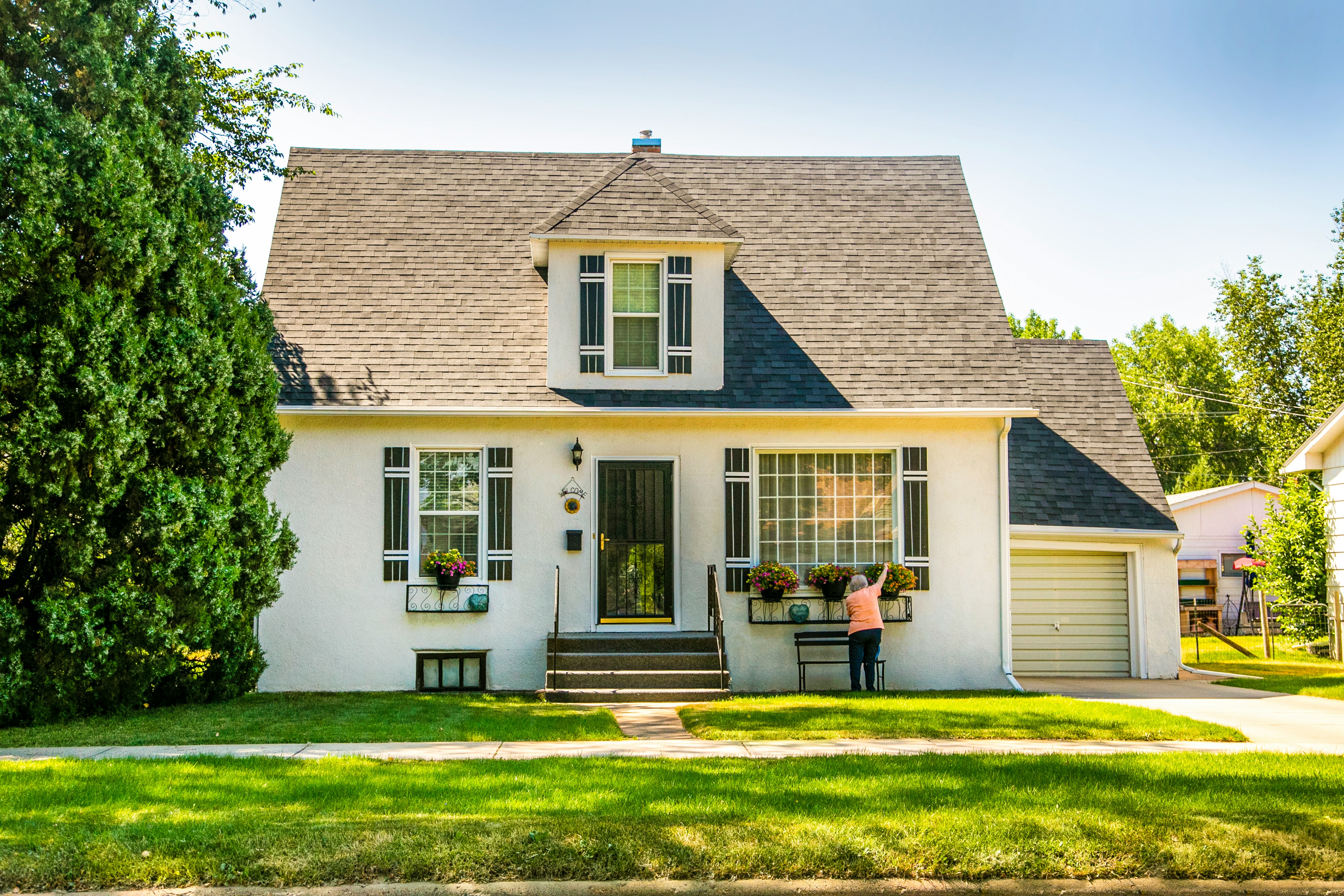
Most home repair bills aren’t surprises — they’re the result of skipped maintenance. A $200 roof cleaning can prevent a $12,000 replacement. A weekend with a pressure washer adds years to your siding. Small, consistent effort keeps the big bills away. Here’s what to prioritize.
Roof Cleaning
Those dark streaks running down your shingles aren’t just unsightly — they’re a living organism called Gloeocapsa magma, a cyanobacteria that feeds on the limestone filler in asphalt shingles. Left untreated, moss and algae trap moisture, accelerate granule loss, and can cut your roof’s lifespan by a decade or more.
The safest approach is a low-pressure soft wash with a diluted sodium hypochlorite solution — never a high-pressure washer, which blasts away protective granules. Apply on a calm, overcast day, let the solution dwell for 15–20 minutes, then rinse gently from the ridge down.
- Inspect for missing, curled, or cracked shingles first
- Clear gutters and downspouts before washing
- Protect surrounding plants with a pre-wet and plastic sheeting
- Install zinc or copper strips at the ridge to inhibit future growth
Pressure Washing
Driveways, decks, walkways, and siding accumulate mold, mildew, oil stains, and oxidized paint that make even a well-maintained home look neglected. Regular pressure washing doesn’t just improve curb appeal — it removes biological growth before it works into cracks and causes structural damage.
Match the pressure to the material: concrete handles 3,000 PSI comfortably; wood siding and decking need a gentler 500–1,200 PSI with a wider fan tip to avoid splintering or stripping. Always work with the grain on wood, and keep the nozzle moving — lingering in one spot etches permanent lines into softer surfaces.
Wood Repairs
Wood rot is the silent enemy of exterior trim, window sills, deck boards, and porch columns. It starts invisibly — moisture gets trapped under failing paint or in end grain — and by the time it’s visible, the damage runs deeper than it looks. A screwdriver poked into suspicious wood is your best diagnostic tool. If it sinks in more than a quarter inch, you have rot.
For small areas, an epoxy wood consolidant and filler system (such as LiquidWood + WoodEpox) can save you from a full board replacement. For larger sections, sister a new board beside the damaged one or replace entirely, treating all cut ends with a wood preservative before installation. Never just paint over soft wood — moisture will continue working underneath.
- Check deck boards, railings, and ledger boards annually
- Probe window sills, door frames, and fascia boards
- Use pressure-treated or cedar for any replacement lumber
- Seal repairs before painting — prime all six sides of new wood
Exterior Painting
Paint isn’t just cosmetic — it’s your home’s first line of defense against moisture, UV degradation, and insects. When paint begins to crack, peel, or chalk, it stops protecting. The good news is that a proper exterior repaint, done right, can last a decade or more. The bad news is that 80% of the work is in the prep, not the painting.
Surface preparation is everything. Scrape all loose paint, sand edges to feather transitions, fill cracks with a paintable exterior caulk, prime any bare wood, and wash the entire surface before you open a can. Choose a 100% acrylic latex paint rated for exterior use — it expands and contracts with temperature changes far better than oil-based alternatives and resists mildew naturally.
- Paint in mild weather: 50–85°F, no rain in the 24-hour forecast
- Follow the shade around the house — avoid painting in direct sun
- Two coats minimum; three on wood that’s been stripped bare
- Caulk all seams, corners, and trim junctions before priming
0 Comments